Inside the Internal Bezel
Friction, gears and the single crown. The mechanisms that shaped the internal bezel, and how Unicrown works.
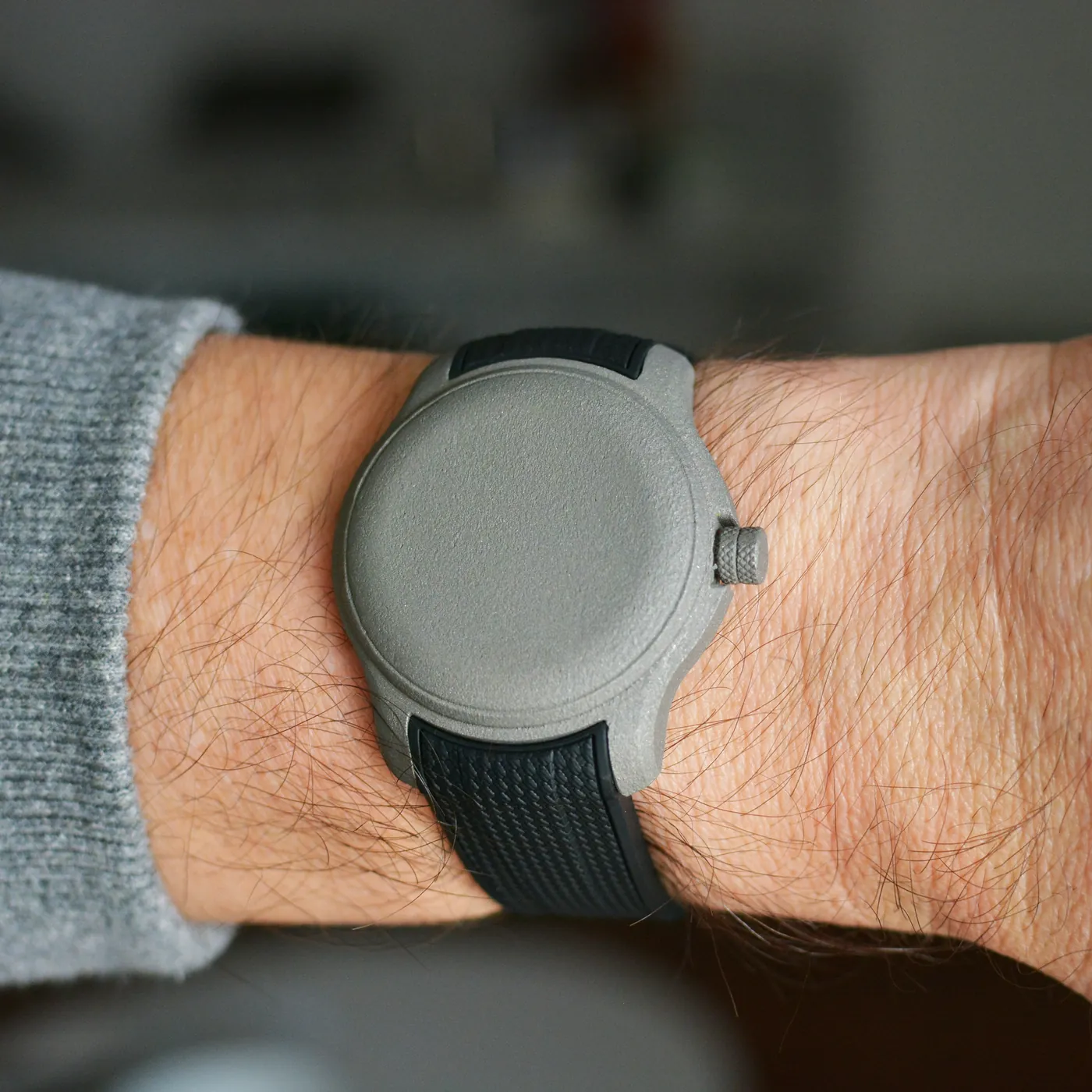
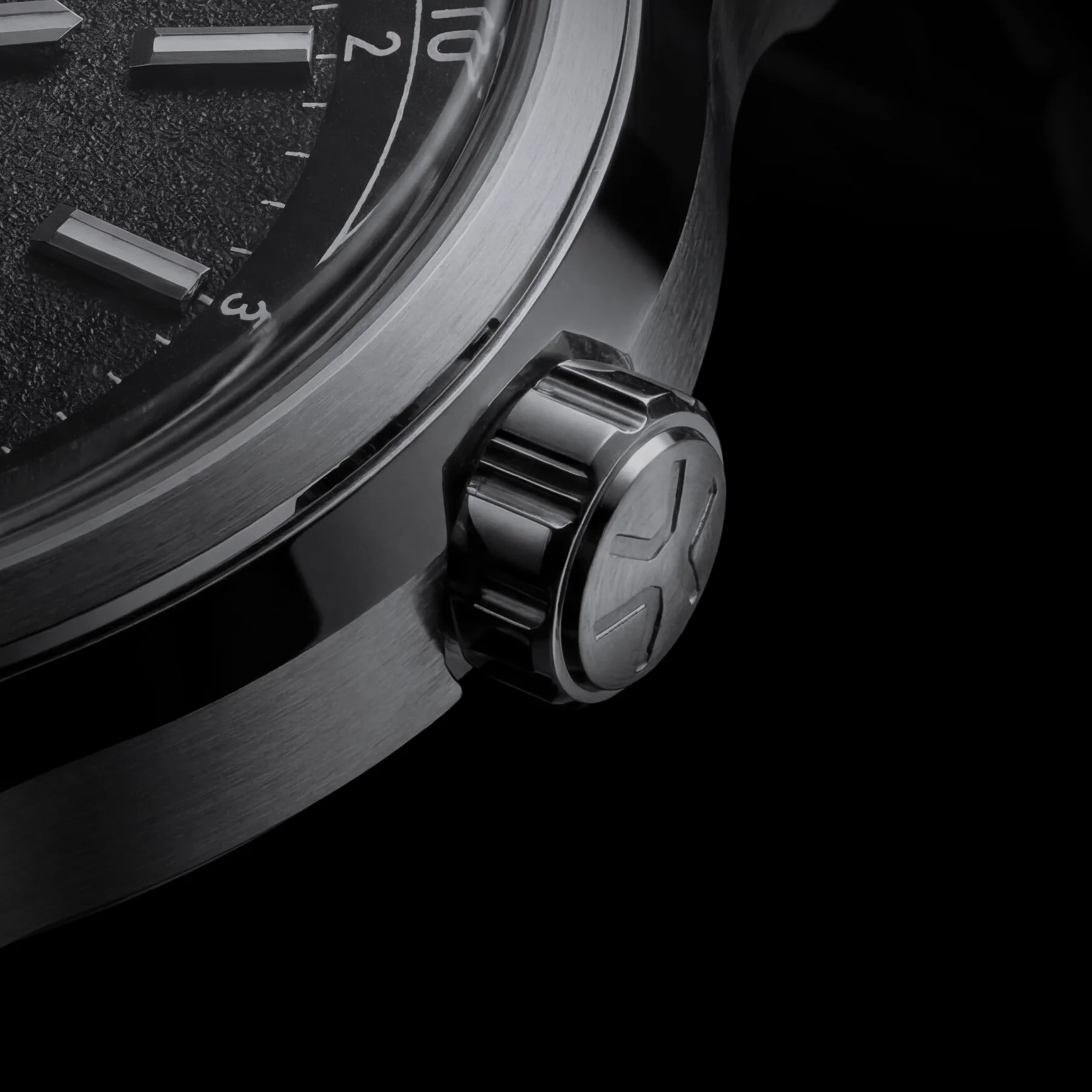
Kintao exists to refine ideas watchmaking left behind. One of them led to our first watch, the UC1 Recurve, and its internal rotating bezel controlled by the Unicrown system (patent pending).
Internal bezels have been controlled through friction, gears and separate crowns. Each approach offers a different way to move the ring.
The Friction Route: Japan, 1961
In 1961 a Japanese maker introduced a watch with an internal rotating bezel controlled by a single crown.
The bezel used friction to transmit movement from the crown. The same maker’s 1964 world-time model also used a crown-controlled internal ring.
The Geared Route: Geneva, 1962
A Geneva dive-watch maker took a geared approach. Their 1962 patent (CH378232A) connected the bezel to the winding stem: a pinion on the stem meshed into teeth cut into the ring. The patent also describes a version where the pinion leaves the bezel teeth when the stem is pulled. The Unicrown selects winding or bezel control by direction of rotation, with the crown pushed in.
Choosing the bezel control
An internal bezel can carry elapsed-time markings or a second time zone. The scale tells you what to read; the mechanism determines how you adjust it.
Two crowns, separate controls
A two-crown design gives the internal bezel a separate control from winding and time setting. For UC1 Recurve, we chose to bring those controls together in one crown.
Timing beyond diving
A rotating bezel is useful on land too. Set its arrow to the minute hand to track elapsed time during a meeting or while cooking. UC1 Recurve is designed for this everyday use.
UC1 Recurve: how the Unicrown works
UC1 Recurve is 10.5 mm thick, including the domed crystal. The Unicrown handles hand-winding, bezel adjustment and time setting through a single crown, with date correction on date models.
The one-way bezel indexes in 120 clicks. A spring-loaded ball and click mechanism locks the bezel in position. With the crown pushed in, turn clockwise to wind the movement and anticlockwise to advance the bezel.
The bezel indexes in 120 clicks.
The idea carried forward
The idea we carried forward is simple: an internal bezel, controlled from one crown. The work sits in how the functions are separated.
The Kintao Team